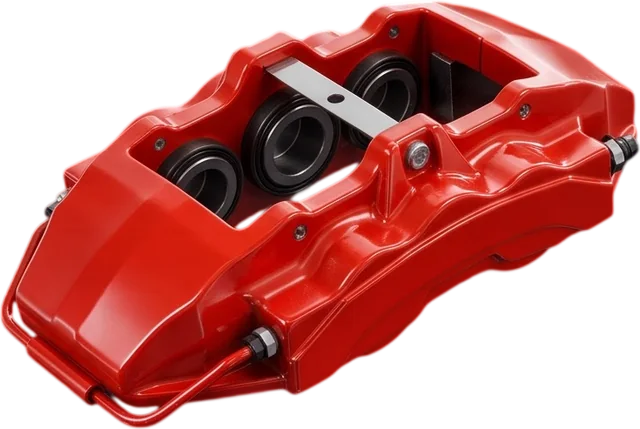
Our advanced infrastructure is key to our success, featuring integrated manufacturing, quality control, research & development, and warehousing. With sophisticated machinery and equipment, we ensure our products are defect-free. To stay current with market trends, we regularly upgrade our technology.

The raw material used in manufacturing AAC Group bearings is SAE 52100 steel, which adheres to international standards. This steel is utilized across all bearing components, including races, cages, and rolling elements. All cages are made from CRC material or brass, in accordance with international specifications.
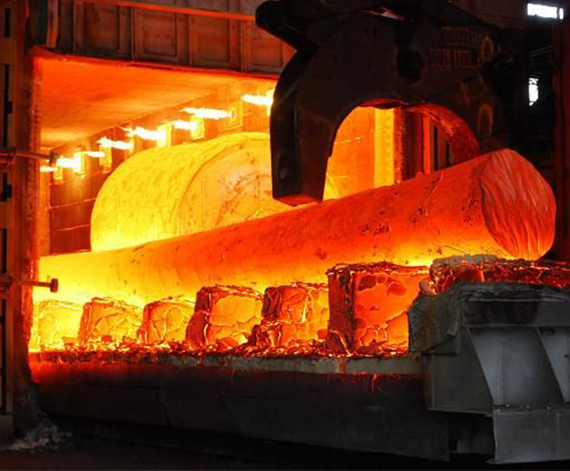
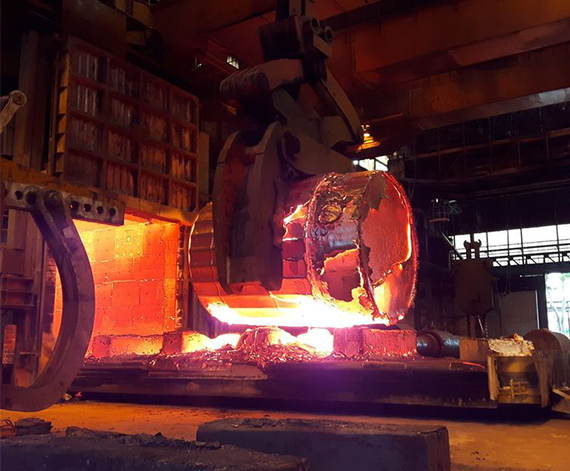
Forging is a metal shaping technique that uses heat and pressure to achieve the desired form. The process involves applying these forces to SAE 52100 steel to achieve the correct shape.
Annealing is a process involving heating and cooling cycles applied to bearings to improve their ductility, allowing them to be shaped into various forms with greater flexibility.
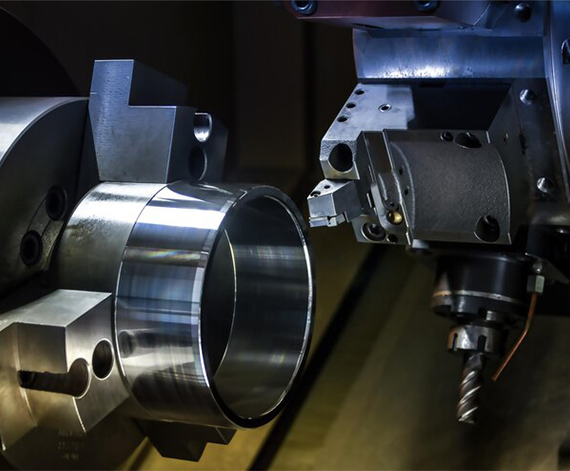
Forged materials are then processed through automatic CNC machines for turning. These machines are renowned globally for their reliable performance and increased productivity, particularly when manufacturing complex components that require a high level of accuracy and precision.
Every part of the bearing, including the inner and outer races, rings, and rollers, undergoes heat treatment to enhance resistance against wear and tear. The hardening process for the inner and outer races follows international standards, reaching a hardness level of 60 ± 2 HRC. To ensure quality, the hardness of both the races and the rolling elements is thoroughly examined and tested with specialized hardness testing equipment.
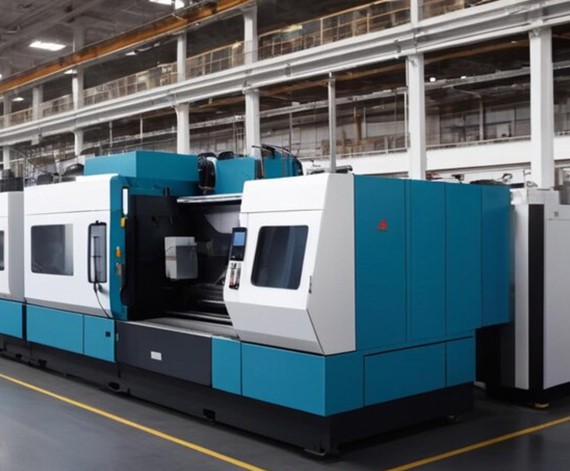
The grinding process involves four distinct stages:
Face Grinding: This stage uses a duplex machine to grind components. During this process, checks are conducted for size variations, flatness, surface roughness, parallelism, and signs of burning.
OD Grinding: At this stage, the focus is on outer diameter (OD) grinding, where components are checked for 2-point and 3-point ovality, roundness, and surface roughness.
Track Grinding: The focus here is on track grinding, with checks for size, curvature, taper, eccentricity, and ovality.
ID Grinding: An electronic system, the Marposs system, is used to control size variations during inner diameter grinding, measuring precision, roundness, ovality, and roughness.
Following the grinding process, we use honing and lapping machines to further reduce the Roughness Average (Ra) value on the track. This step ensures a smooth finish and maintains the Ra value for exceptionally well-finished bearing components.
Interested in working with us?